Create Sovereign Memory
Own what you know. Make the model a utility.
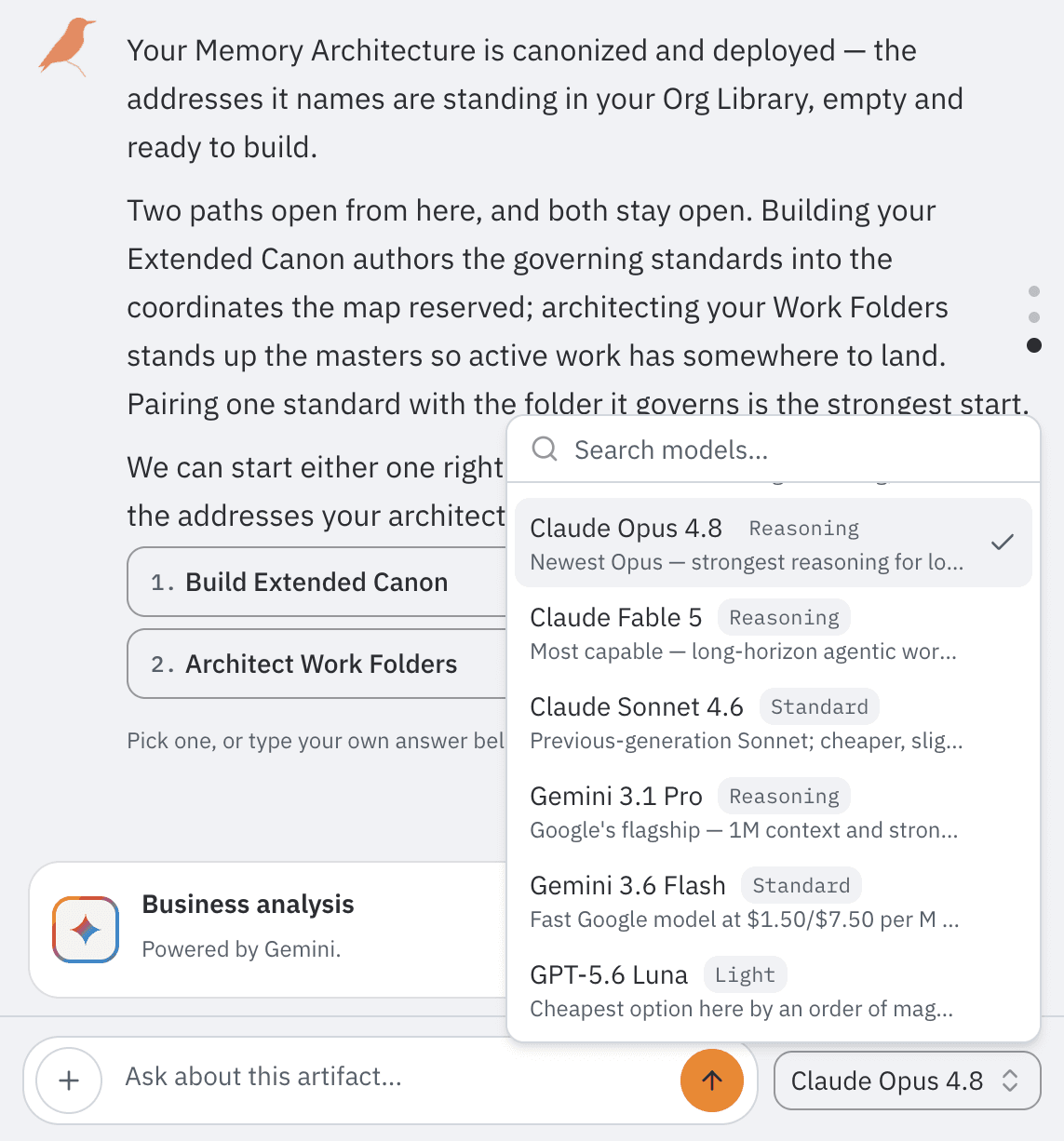
With Starling MX, any of eight leading models can read and write to your repository. The model is interchangeable.
Your memory is the compounding asset.
Ensuring what your business knows stays with your business.
Why now
The case for moving now.
The most valuable thing your business has is what it knows. The default path of this era hands that to the AI labs. Your knowledge ends up inside their models, in formats you don’t own, and under terms and roadmaps you don’t set. Starling reverses that. Your memory becomes the compounding asset, the model an interchangeable tool.
Model and memory — machine processing × human intelligence — work better living apart. True information sovereignty depends upon it.
Dario Amodei fears a misaligned swarm of AI agents could take over the Internet as soon as March 2027. This is no longer an argument about the future. Secure your knowledge now.
The solution
This is your Org Library — every AI artifact, organized so your knowledge is the asset.
It places everything your business knows at the top of your tech stack, in a repository you own and control.
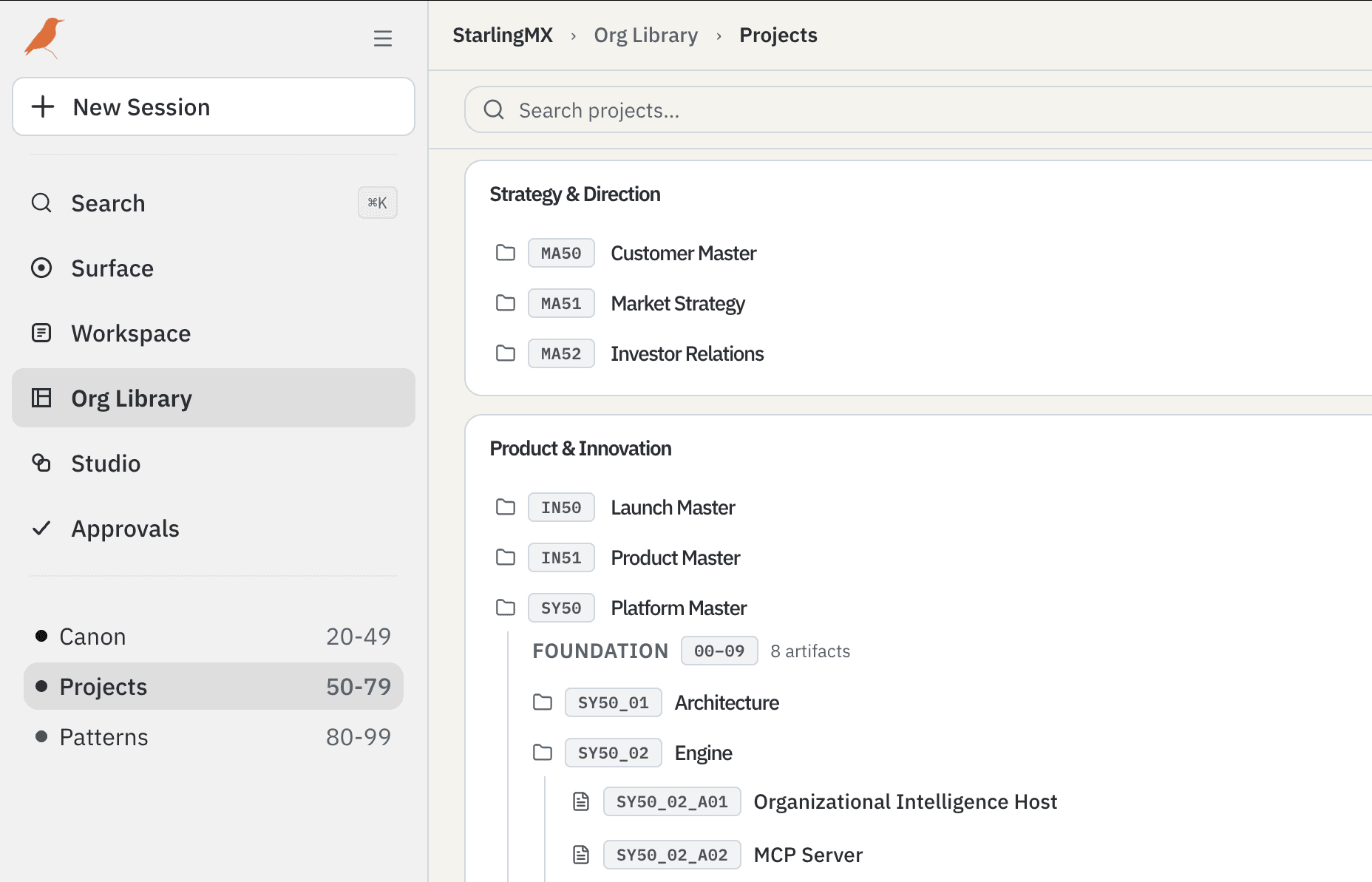
Starling MX is both a repository and foundry for sovereign memory. It houses the Canon and Patterns that define institutional knowledge, and uses them to forge the Projects that guide daily work. All memories — the protocols and value systems, active work, and synthesized wisdom that drive your business forward — live in your Org Library, which organizes lossless memory in tiers you hold.
Starling OS governs the repository, providing the System Memory (universal operating logic) that builds your Org Library’s Persistent, Active, and Learning Memory (unique to your organization).
Memory Tiers
- MA21 Business ModelPersistent Memory Node
- Canon
- MA50 Customer MasterActive Memory Folder
- Projects
- IN80 Org Brain as Head CodeLearning Memory Node
- Patterns
A human reads the names; a machine resolves the addresses.
What an Org Brain provides
Together, Starling OS and your Org Library provide the operating logic and organizational truth that constitute an Org Brain.
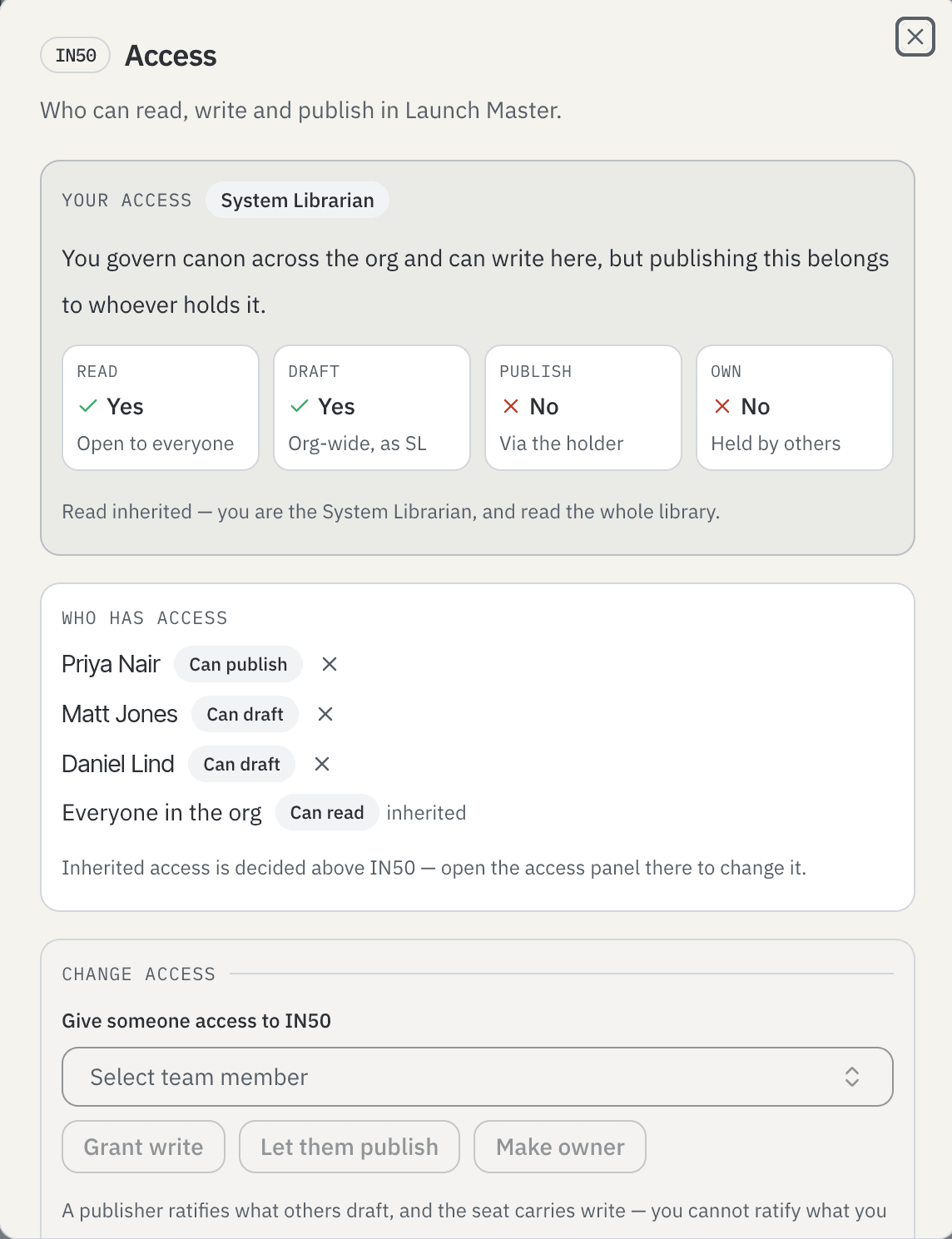
- It’s governed seat by seat. Every node in the Library carries permissions — the OS provides relevant memory to those who can read, write, and publish it.
- The Library is yours. Canon, Projects, and Patterns sit at permanent addresses in a repository you hold — not inside a model.
- The OS makes work memory. Starling OS treats active work as memory — addressed, governed, and watched for drift against your canon.
- The Brain never fills. Instead of piling in context until a window dumbs down, Starling assembles fresh by query, so the Org Brain grows without limit.
How it works
The Domain Language Model (DLM)
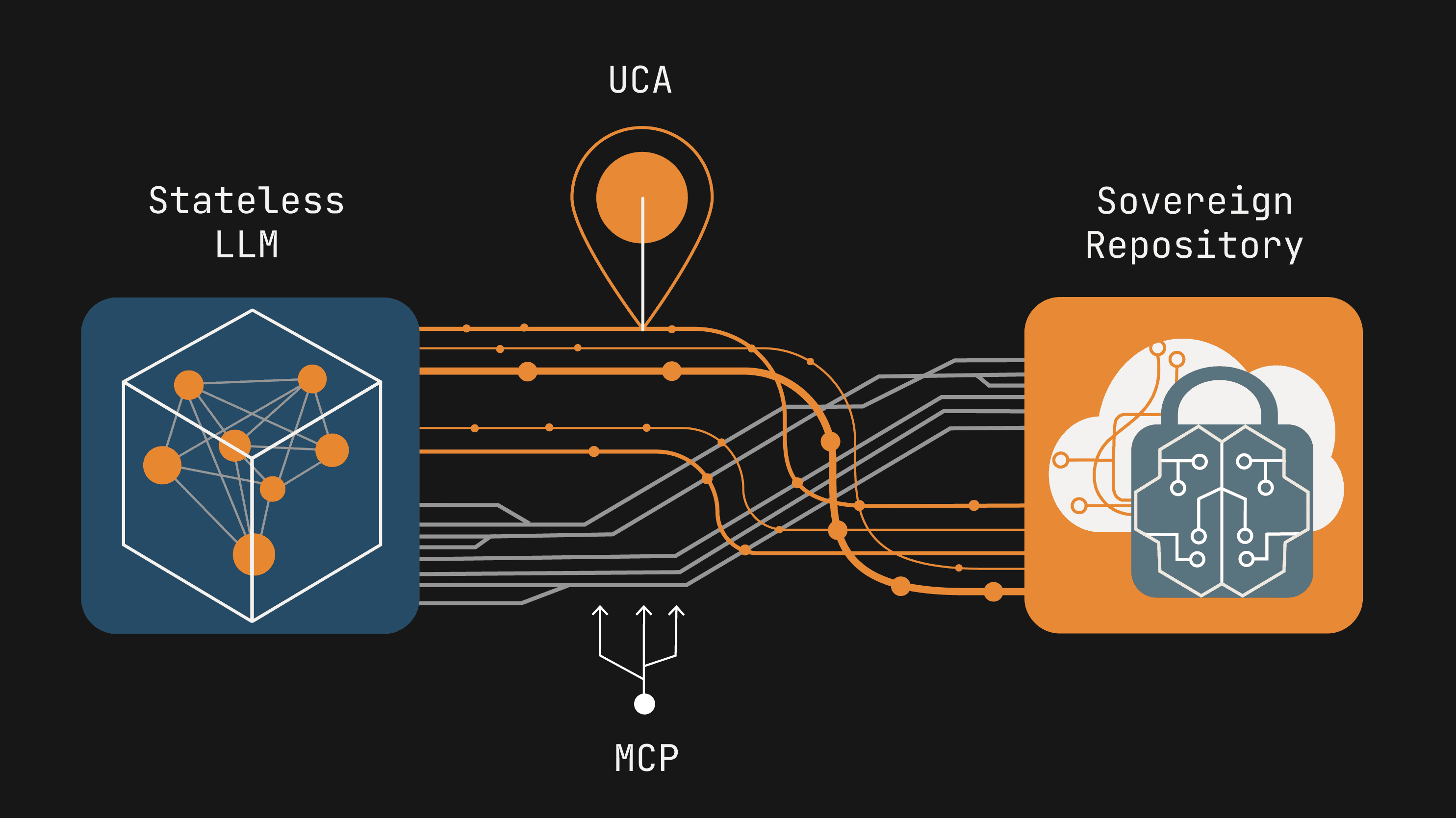
Starling is the first O(1) Domain Language Model. We define a DLM as stateless, interchangeable AI systems reading and writing to sovereign memory. O(1) means it assembles context before the model is called. It uses Anthropic’s free MCP retrieval protocol and our free UCA classification standard to assemble context by address, not search. A sovereign repository holds both operating system and organizational memory.
The DLM doesn’t compete with the LLM; it contains and governs it.
In plain terms, this means your organization’s knowledge and work live in a repository you own and control, structured so session-based AI runs efficiently: context in, work out, nothing retained, tokens managed.
Cross-Intelligence
Sovereignty isn’t a trade-off. It’s an upgrade.
Everyone’s racing to build “super-intelligence” into bigger and bigger models. The real gain is Cross-Intelligence — the best machine capacity working from your secure human intelligence. Not a smarter model in someone’s lab, but any model reasoning from what your organization actually knows.
Stored AI memory hardens and drifts — a Monday pivot can take weeks to land. Starling reasons over governed canon that stays current, so every model works from what’s actually true.
The result? Better intelligence, real ownership, and peace of mind. Pull the memory and the model goes inert — it can’t run off with what it was never allowed to keep.
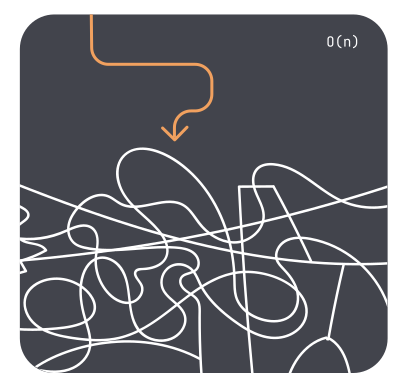
AI Memory
drifts · probabilistic
Memory created by AI lives in vector databases. The more data, the wider the RAG search. A pivot takes weeks to land.
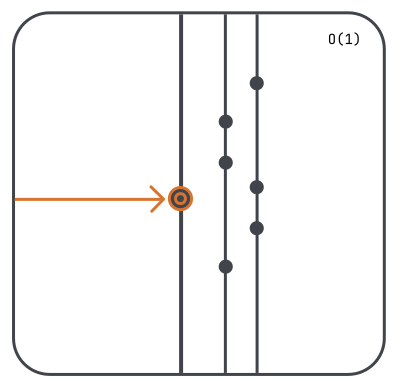
Starling
current · deterministic
Starling’s machine-side manifest assembles context from your human-side repository. Steward mode eliminates drift.
The experience
An AI chief of staff that knows your business.
The whole company’s chief of staff — and it knows who’s asking.
- Works with everyone, from the front line to the board. The CEO briefs the board and a new hire drafts against the same governed memory.
- Works within each person’s permissions. Read, draft, publish, own — granted per seat and folder. Team members work only where they’re scoped.
- Speaks every language in your business. The thousands of API and application languages, and the carefully crafted brand nomenclature your team works in.
- Does the actual work, in any format. A memo, a deck, a P&L, a board briefing, a handbook, a website — drafted to your standards.
- Sees the whole library so your AI doesn’t need to. Ask a question that spans documents and it answers by address — surfacing any conflict.
- Turns every deliverable into memory. Finished work commits back to the brain at its address, so the next task starts from more than the last.
Ask me anything, Priya
The economics
Not another AI system. A business accelerator, in daily conversation.
$99/mo for the Owner’s seat. Cost-plus token usage for everybody else.
01
Free to start. The UCA standard is free and complete. Load it into any AI, and reach Minimum Viable Intelligence in five memories. Confidently turn off AI memory with the First Fifteen.
02
The build, once. Your first month stands up your Org Brain — your canon, standards, and memory architecture. The kind of accelerator that used to run thousands, executed in onboarding.
03
Stay for Starling OS. After the build, a single Owner governs your memory system, which connects to any MCP-accessible AI: Claude, GPT, Gemini, or your own.
04
Bring your team with no per-seat tax. You only pay for one seat, then cost-plus for the work the AI does — metered to the token, not charged per head — on any model, not one lab’s.
Every other tool sells you seats. Starling MX is an MCP-accessible repository for knowledge — with an operating system for Smart Business.
See pricingTwo ways in
Starling works at any scale.

Smart Office
Our self-serve platform for small business.
Create your repository; invite your team.
Smart Enterprise
We design and staff your governed intelligence system.
For larger organizations, architected with you and owned by you.
Stay in context
Get the weekly intelligence brief.
Subscribe to On Cognitive Design, from Chris Kincade, CEO, Starling Memory Works.