Our purpose
Preserving human agency in AI systems.
Use our tools to turn off AI memory systems.
Starling Memory Works offers Starling MX as a self-serve repository, and Starling Enterprise for custom integrations. Universal Cognitive Architecture, our free standard, can also be used to turn off the AI memory.
If you’re unconvinced, start with Starling MX. Once your constitutional memories and memory architecture are codified, Starling can perform any task you’d ask of a chief of staff.
True Information Sovereignty
Turn off the AI’s memory.
Moving your knowledge out of the model is the best defense against rogue AI. If your favorite model is shut down, you switch to backup systems automatically.
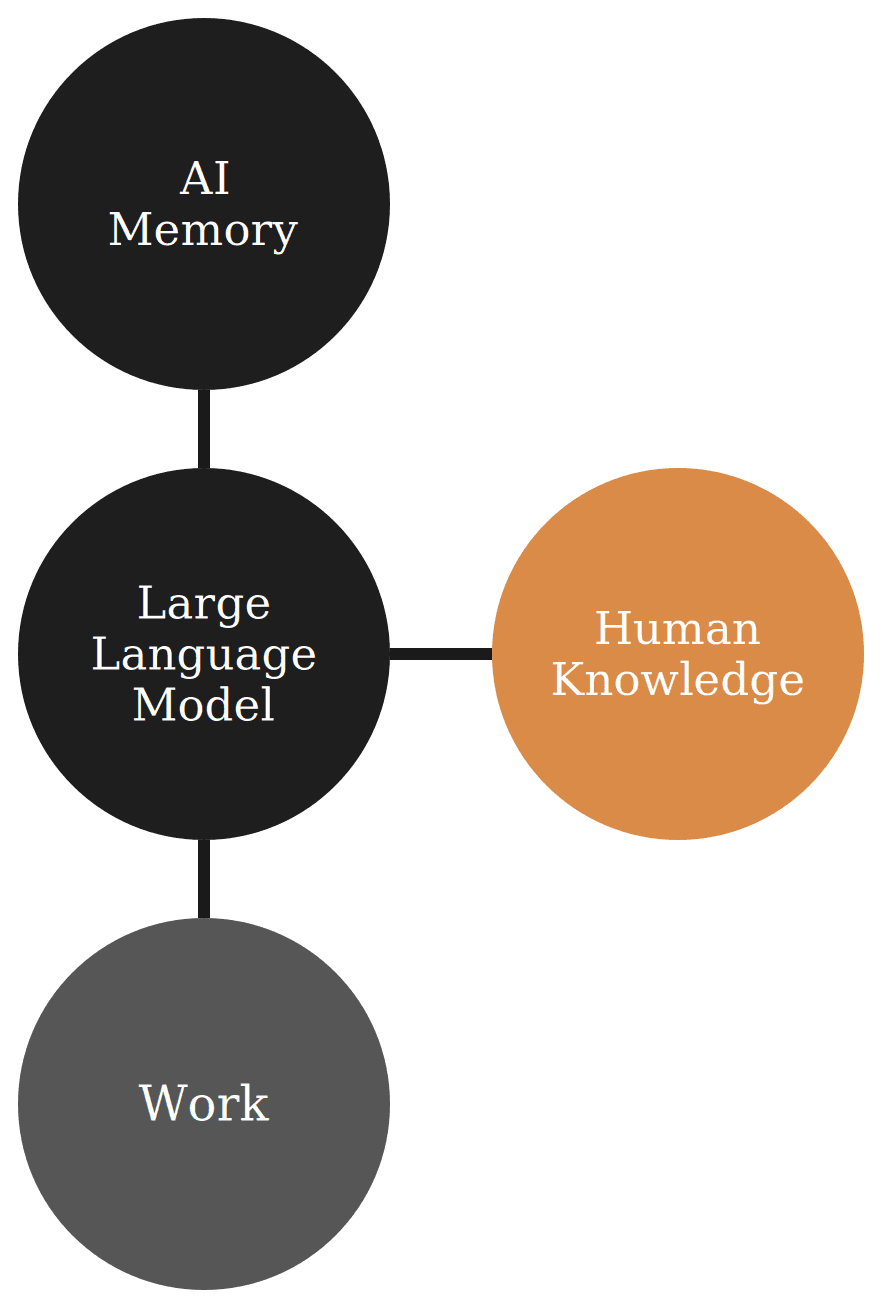
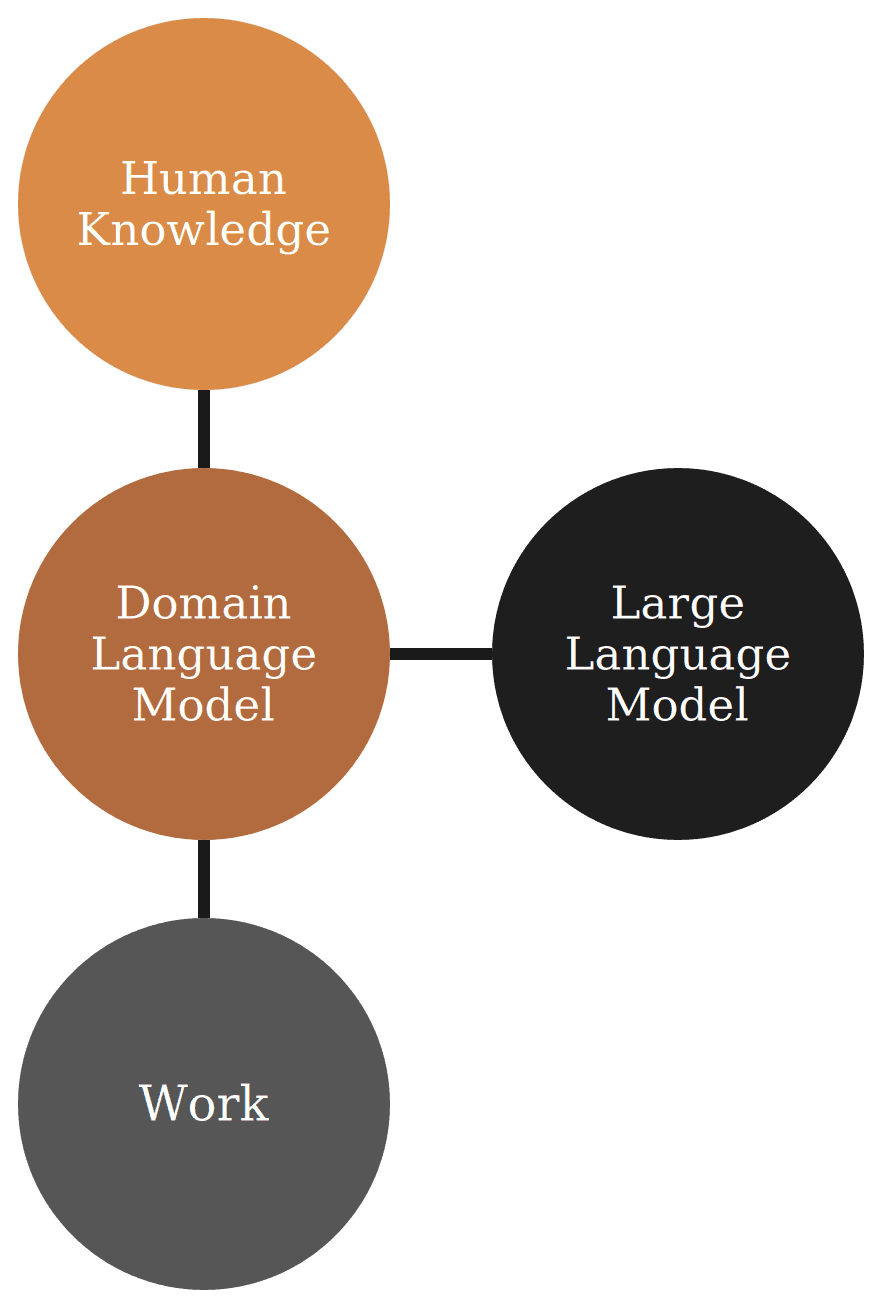
Information sovereignty means housing model and memory separately. The model that reasons should be separate from the memory it reasons over — the way the bank that takes your deposits was split from the one that speculates with them. The singularity isn’t the day AI gets smarter than us; it’s when it has instant access to everything we know.
You don’t have to wait for the labs or regulators to settle this. The Domain Language Model plugs into the AI you already run. You can build your own DLM today. Turn the AI’s memory off, write your business down at permanent addresses, and keep it in a repository you own.
Problem
Solution
The story
From business to knowledge design.
Starling grew out of an accelerator program that taught leaders what business actually runs on — value systems, smart workflows, impact branding, scalable inventions, and other frameworks. When the same tools became machine-executable logic, the discipline changed. Where organizational design arranges people and process, Cognitive Design defines an intelligence system.
The origin
Princeton Kaizen
Cognitive Design began as a joint accelerator led by optimization guru Ari Meisel and innovation consultant Chris Kincade. Before it was ever taught to AI, Cognitive Design helped business leaders clarify their fundamentals. That human-centered foundation became the core of an AI-native architecture, establishing the Smart Org as a balanced, ‘whole-brained’ organization.
The turn
Knowledge design
Lean’s process discipline and Design Thinking’s focus on the human carried forward, unified into a hemispheric model where machine efficiency and human values are co-equal, with the latter getting the final vote. As consulting and coaching frameworks were made executable by AI, business design became knowledge design. And it needed coordinates to file the canon it was producing. That led to Universal Cognitive Architecture.
September 2025
The first Org Brain
Using the Starling System Library v1.0, Chris built Starling’s own Org Library end-to-end in two and a half hours. It worked, but couldn’t scale: The SSL and Org loaded as documents and filled the context window. The same month, Anthropic began shipping memory to Claude — first Team and Enterprise, then all paid users in October.
January 2026
The Look-Up DLM is proven, and the decision to build
Once Claude’s Notion connection hardened, the Domain Language Model was finally scalable. After turning off Claude’s memory, performance improved. The library could grow while the model read only a map. With the Look-Up DLM proven, Chris hired a team of AI-native engineers to build the Assembly DLM, powered by query-based, pre-model context assembly. The operating logic had to become software, and the SSL Starling OS.
August 2026
The standard goes public
The Domain Language Model is defined as stateless, interchangeable AI reading and writing to sovereign memory. Universal Cognitive Architecture is released, free and open under CC BY 4.0 — the classification standard that makes organizational knowledge addressable by any AI. Covered by Research Live, Business Age, TechRound, and The AI Journal.
Today
Smart Office + Smart Enterprise
Starling MX, the first Assembly DLM, is now onboarding team Owners. Smart Office is self-serve from $99/month; Smart Enterprise is architected with you and housed on your infrastructure.
What it means
O(1): Ending the Big Compute Era
The entire AI buildout comes down to one idea in computer science: Big O. It measures how much compute a system needs as your knowledge grows. O(n) grows with your data: the more you have, the bigger the search and retrieval window. O(1) stays flat: context is assembled by address. O(log n) is an addressing system with a lookup apparatus. It’s much faster than search, but it requires a manifest.
O(1) is really only possible as a measurement of token usage. All addresses need a look-up. The difference is who does the look-up. Starling performs the task independent of the model, so no tokens are used, and the AI has limited exposure to your knowledge.
Think of finding a word in a book. O(n) is flipping through every page. O(1) is the index — 100 pages or 10,000, one move. RAG is a library without a card catalog. Addressing is the Dewey Decimal System. That’s why the labs need infinite compute: their architecture searches everything, so the more you know, the more it costs to answer. Starling goes straight to the address, and needs the same compute at 28 documents or 28,000.
RAG is O(n). The Look-up DLM (Claude + Notion) reads an index and loads by address — O(log n), much faster than O(n), but the model still does the lookup. The Assembly DLM (Starling) assembles context in code, before the model is ever called — O(1), constant at any scale, no lookup at all.
The Look-up DLM puts the model at the top of the stack; the Assembly DLM puts your knowledge at the top, released on a need-to-know basis. Constant compute, and sovereignty by design, not a legal agreement. Big Compute is chasing infinity. Addressed memory ends the chase.
| Property | RAGO(n) | Look-up DLMO(log n) | Assembly DLMO(1) |
|---|---|---|---|
| How it retrieves | RAG · O(n)Searches for what's similar | Look-up DLM · O(log n)The model loads by address | Assembly DLM · O(1)Assembled by address, before the model runs |
| Attributes | RAG · O(n)Work grows with data | Look-up DLM · O(log n)Governed, addressed, owned | Assembly DLM · O(1)Constant, deterministic, sovereign |
| Sovereignty | RAG · O(n)None. Your memory is the index | Look-up DLM · O(log n)Legal. ToS forbids training | Assembly DLM · O(1)Architectural. By design |
| Status | RAG · O(n)The incumbent | Look-up DLM · O(log n)Proven in production | Assembly DLM · O(1)Starling. Patent-pending |
Neither means your context is never seen: the scoped set for one task goes to the model at inference, and that moment rests on the provider’s terms.

The founder
“You have to organize your knowledge base for AI, rather than trying to make AI work for your scattered data systems.”
Chris Kincade spent years coaching founders on values, positioning, and process before turning those frameworks into something a machine could execute. Starling is the result: consulting-grade organizational thinking, encoded as a memory architecture any model can read.
He writes On Cognitive Design, the weekly brief on sovereign organizational memory.
Headquarters
Princeton, New Jersey
Incorporated
Delaware, USA
The standard
UCA: free & open, CC BY 4.0
Newsletter
On Cognitive Design
Work with us
Help your organization remember.
Questions, partnerships, press, or start building your Org Brain today.